


If you are looking for calcium rich foods after 60, start with ordinary foods you can eat consistently. Milk, yogurt, fortified soy beverages, tofu, canned fish with bones, beans, and some leafy greens can all help. The goal is not to force down one giant serving or rely on a calcium pill without a plan. It is to build enough calcium into meals while accounting for your health history, medications, and ability to absorb nutrients.
Read the broader bone-health plan for movement, muscle, balance, and screening after 60.
Calcium supports the structure of bones and teeth. It also helps muscles move, nerves send signals, and blood vessels function. Food is usually the best place to begin, but food alone is not always enough for someone with a restricted diet, poor absorption, a diagnosed bone condition, or a medication that affects calcium balance.
What are the best calcium-rich foods after 60?
Calcium-rich foods after 60 include dairy foods, fortified soy foods and beverages, calcium-set tofu, canned sardines or salmon with bones, beans, and selected greens such as kale or collards. Check labels on fortified products because calcium amounts vary by brand. A varied diet is more useful than chasing one so-called superfood.
The best choice is the one you tolerate, enjoy, and can eat regularly. If dairy works for you, plain yogurt, kefir, milk, and cheese make calcium easy to add. Lactose-free milk has similar calcium when it is fortified or naturally comparable to regular milk. If you do not eat dairy, fortified soy milk and soy yogurt can provide substantial amounts. Almond and other plant beverages may contain calcium, but you must check the label.
| Food | Common serving | Approximate calcium |
|---|---|---|
| Plain nonfat yogurt | 8 ounces | 488 mg |
| Plain low-fat yogurt | 8 ounces | 448 mg |
| Low-fat kefir | 1 cup | 317 mg |
| Low-fat milk | 1 cup | 305 mg |
| Fortified unsweetened soy beverage | 1 cup | 301 mg |
| Canned sardines with bones | 3 ounces | About 325 mg |
| Calcium-set tofu | 4 ounces | About 205 mg |
| Cooked kale | 1 cup | About 179 mg |
These figures come from standard food-source references, including the U.S. Department of Agriculture calcium food guide and the Bone Health and Osteoporosis Foundation food list. Actual amounts can change with the brand, recipe, serving size, and preparation. Use the Nutrition Facts label when one is available.
How much calcium do adults over 60 need?
Most women age 51 and older need 1,200 mg of calcium daily, while men ages 51 to 70 need 1,000 mg. Adults age 71 and older need 1,200 mg. These amounts include calcium from food and supplements, not a reason to take the highest possible dose.
The amount depends on age and sex. The National Institutes of Health calcium fact sheet lists 1,200 mg per day for women age 51 and older and adults age 71 and older. It lists 1,000 mg for men ages 51 to 70. These are general recommended amounts, not a personal prescription.
One cup of milk plus a serving of yogurt can provide much of a 1,200 mg target. The rest can come from meals containing tofu, beans, cheese, fortified foods, or greens. You do not have to reach the number with dairy, and you do not need to turn every meal into a calculation exercise. A few repeatable combinations are easier to maintain than a perfect spreadsheet.
Calcium needs can be harder to meet if you avoid dairy, eat very little, have a condition that affects absorption, or have symptoms that make eating difficult. A registered dietitian or clinician can help you build a realistic plan without guessing at supplement doses.
Which non-dairy foods contain useful amounts of calcium?
Useful non-dairy calcium sources include fortified soy beverages, fortified soy yogurt, calcium-set tofu, canned sardines or salmon with bones, beans, collard greens, kale, bok choy, and fortified juices or cereals. Fortification is not automatic, so read the label before counting a product toward your daily total.
Fortified soy milk is one of the easiest dairy-free choices because it can replace milk in cereal, oatmeal, smoothies, or coffee. Calcium-set tofu works in stir-fries, soups, and salads. Canned sardines and salmon with bones provide calcium because the edible bones contain it. If that texture bothers you, mash the fish into a spread or salad.
Leafy greens deserve a closer look. Kale, collards, and bok choy can contribute calcium in meals. Spinach is often mentioned in calcium lists, but its oxalates reduce how much calcium the body can absorb. That does not make spinach a bad food. It means spinach should not be your only calcium strategy.
Plant-based eating can meet calcium needs, but it takes attention. Choose fortified products consistently, vary your food sources, and check labels when switching brands. A product described as almond, oat, or rice beverage is not automatically calcium-fortified.

How can you help your body absorb calcium?
Support calcium absorption by getting enough vitamin D, choosing foods you tolerate, checking fortified-product labels, and reviewing supplement or medication timing with a pharmacist when needed. Vitamin D helps the body absorb calcium, but more vitamin D or calcium is not automatically better.
Vitamin D helps the body absorb calcium in the gut. Food, sunlight, and supplements can all play a role, but the right approach depends on your age, location, skin, medical history, and medications. Do not use a large vitamin D dose as a substitute for testing or professional advice.
Food choices also matter. Calcium carbonate supplements are absorbed best with food, while calcium citrate can be taken with or without food, according to the NIH. Those are supplement details, not reasons to start a supplement without checking whether you need one. If you use antacids, thyroid medicine, certain antibiotics, HIV medicine, or osteoporosis treatment, ask a pharmacist about interactions and spacing.
Spread calcium-containing foods across the day instead of trying to correct a low intake with one oversized serving. Pair a food you already eat with a practical addition: yogurt with breakfast, fortified soy beverage in oatmeal, tofu with lunch, or beans and greens at dinner. Consistency beats an elaborate plan that lasts three days.
What calcium-rich meals are easy to repeat?
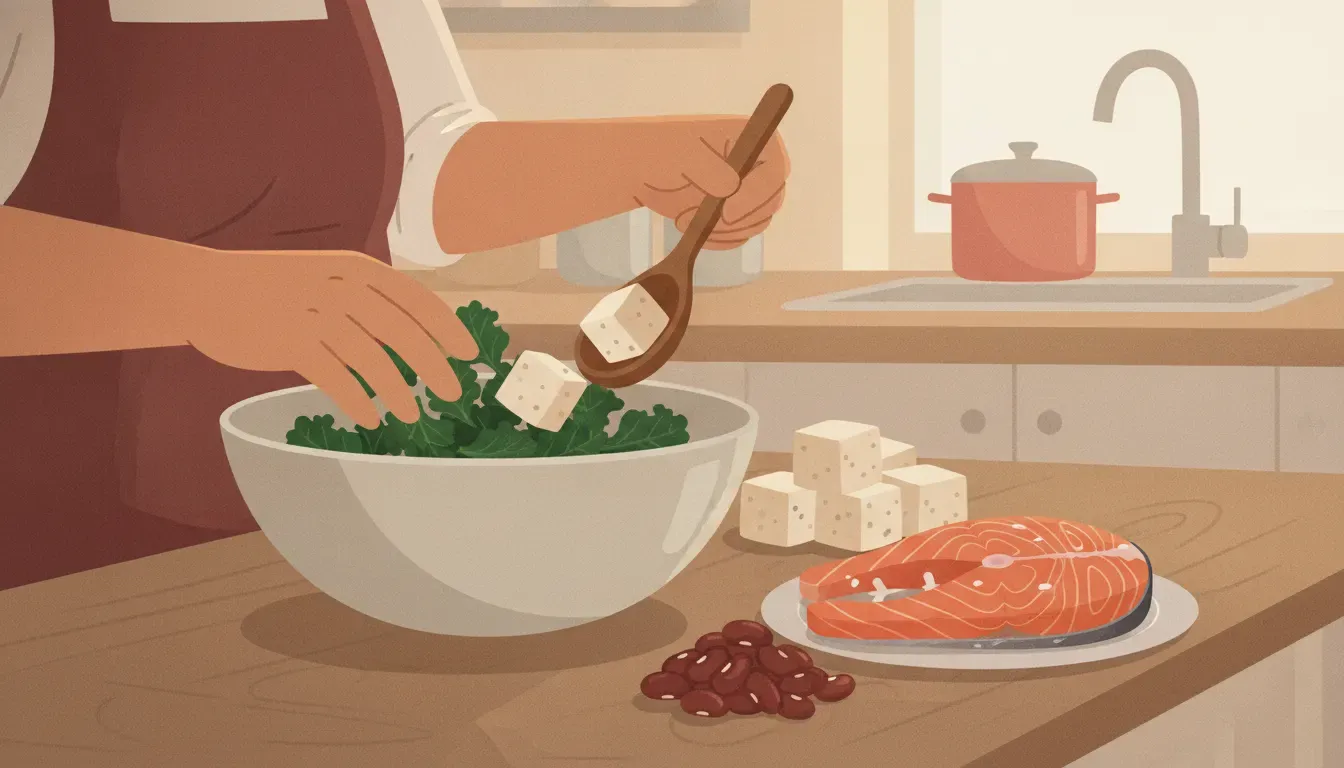
Easy calcium-rich meals might include yogurt with berries, oatmeal made with fortified soy beverage, a bean and kale bowl with calcium-set tofu, sardines on whole-grain toast, or salmon with greens. Choose combinations that fit your appetite, budget, culture, and medical needs.
- Breakfast: Plain yogurt with berries and oats, or oatmeal made with calcium-fortified soy beverage.
- Lunch: A bean and kale bowl with calcium-set tofu, vegetables, and a simple dressing.
- Dinner: Sardines or canned salmon with bones alongside greens, beans, or a grain.
- Snack: Cheese with fruit, yogurt, or a fortified beverage if those foods fit your diet.
- Dairy-free option: Fortified soy yogurt, tofu, beans, and greens spread across meals.
Do not treat this list as a rigid menu. Some people need lower sodium choices, some need to limit certain foods because of kidney disease, and some have swallowing, dental, or digestive problems that change what is practical. The right meal plan is the one that meets your broader health needs.
Learn how Revival Point approaches doctor-formulated, research-backed healthy-aging nutrition.
When is food alone not enough?
Food alone may not be enough when your diet is restricted, you have a condition that affects absorption, you have a history of osteoporosis or a low-trauma fracture, or a clinician has identified a nutritional gap. A supplement may be appropriate for some people, but it should fill a defined need rather than replace a balanced diet.
Talk with a clinician if you have had a fracture from a minor fall, lost height, developed unexplained back pain, or have been diagnosed with osteoporosis or osteopenia. Ask whether you need a bone-density test, medication review, nutrition referral, or a plan for calcium and vitamin D.
Medical review is also sensible if you have celiac disease, inflammatory bowel disease, a history of bariatric surgery, chronic kidney disease, or another condition that can affect nutrient absorption or mineral balance. Long-term use of some medicines can matter too. Bring a current list of prescriptions, over-the-counter products, and supplements to the appointment.
Do not assume a calcium supplement is harmless because it is sold without a prescription. Calcium can interact with medicines, and high supplemental intake is not right for everyone. A pharmacist can often give practical guidance about timing and interactions. If your diet already provides enough, adding more may not improve the result.
Frequently asked questions about calcium-rich foods
What one food is highest in calcium?
There is no single best food for everyone. Plain yogurt, fortified soy beverages, kefir, sardines with bones, and some calcium-set tofu can provide substantial amounts per serving. Compare the serving size and label, then choose foods you tolerate and can eat consistently.
Are dairy foods required to get enough calcium?
No. Dairy foods are convenient sources, but fortified soy beverages and soy yogurt, calcium-set tofu, sardines or salmon with bones, beans, kale, collards, and bok choy can contribute. Check labels because plant beverages and tofu vary widely in calcium content.
Does vitamin D help the body absorb calcium?
Yes. Vitamin D helps the body absorb calcium, but taking extra vitamin D does not make a high-calcium diet automatically better. Your needs depend on health history, diet, sun exposure, medications, and testing. Ask a clinician whether supplementation or testing makes sense.
Can calcium supplements replace calcium-rich foods?
Supplements can fill a documented gap, but they do not replace the protein, fiber, vitamins, and other nutrients found in meals. Review the choice with a clinician or pharmacist, especially if you have kidney disease, osteoporosis, digestive disease, or take prescription medicines.
Is spinach a good calcium source?
Spinach contains calcium, but oxalates reduce how much the body absorbs. Kale, collards, bok choy, fortified foods, tofu, dairy, and fish with edible bones may be more practical calcium choices. Keep spinach in your diet if you enjoy it, but do not count on it alone.
This article is for educational purposes only and is not medical advice. It does not diagnose, treat, cure, or prevent any disease. Talk with a qualified healthcare professional about your individual health needs.
