


CoQ10 benefits are often described as if one capsule can fix low energy, protect your heart, and reverse the effects of aging. That is not what the evidence shows. Coenzyme Q10 is a real nutrient involved in cellular energy production, but the results from human studies vary by condition. Older adults also face a higher chance of medication interactions, so the smart approach is to separate reasonable support from promises.
What is CoQ10?
Coenzyme Q10, usually shortened to CoQ10, is a substance the body makes naturally. Cells use it in the mitochondria, structures that help turn food into usable energy. CoQ10 also acts as an antioxidant, which means it helps protect cells from oxidative damage.
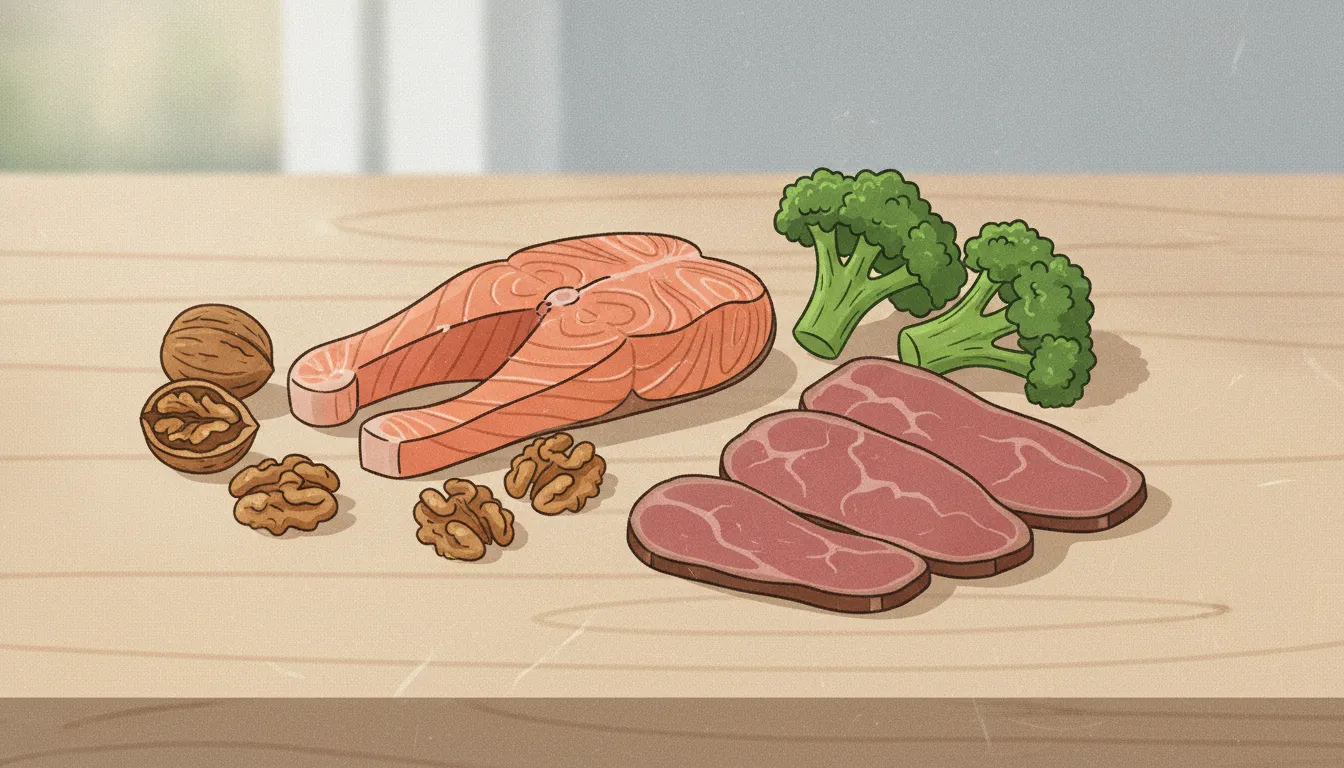
CoQ10 is found throughout the body, with higher levels in organs that use a lot of energy, including the heart, liver, kidneys, and pancreas. Food sources include meat, oily fish, nuts, and soybean oil. Food can contribute to normal intake, but typical amounts are not expected to raise blood CoQ10 levels as much as a supplement.
CoQ10 supplements generally come in two forms: ubiquinone and ubiquinol. Ubiquinone is the oxidized form, while ubiquinol is the reduced form. Marketing often treats one as automatically superior, but there is no simple rule that makes one form best for every older adult. The more important questions are product quality, amount, tolerability, and whether the supplement fits the person's health plan.
Which CoQ10 benefits have the strongest human evidence?
The honest answer is that CoQ10 has plausible biology and some encouraging studies, but it is not a proven treatment for most conditions. The evidence is more useful when discussed outcome by outcome.
Cellular energy and normal aging
Because cells use CoQ10 in energy production, it is reasonable to ask whether a supplement improves everyday energy. The answer is not settled. CoQ10 levels may decline with age, but raising a blood level does not automatically translate into more energy, better mitochondrial function, or improved independence.
Some studies of exercise and physical performance have found limited or inconsistent effects. That matters for older adults who want to remain active. CoQ10 should not replace protein, resistance training, sleep, treatment for anemia, or a medical evaluation for new fatigue.

Heart function and heart failure
CoQ10 has been studied in people with heart failure and other cardiovascular concerns. Some small studies and reviews suggest possible improvements in symptoms or measures of heart function. Other reviews describe the evidence as mixed or inconclusive, and larger, better-designed trials are still needed.
This is an important boundary: CoQ10 is not a replacement for prescribed heart medicines, blood pressure control, a heart-healthy eating pattern, or follow-up with a cardiologist. The American Heart Association notes that CoQ10 may interact with blood pressure medicines and warfarin. Anyone with heart failure should ask their health care professional before adding it.
For broader prevention advice, see Revival Point's heart health guide for women over 60. That article covers risk factors and symptoms rather than presenting CoQ10 as a stand-alone solution.
Migraine frequency
Some research suggests CoQ10 may reduce how often migraines occur or how long they last for some people. The evidence is not strong enough to guarantee a result, and studies often involve consistent use over several months. Anyone with new, severe, or changing headaches needs medical evaluation instead of relying on a supplement.
Blood pressure
CoQ10 is sometimes promoted as a natural blood pressure supplement. Current evidence does not show a reliable, meaningful effect for everyone. If you take blood pressure medicine, do not use CoQ10 to replace it or adjust it yourself. Combining supplements with medication can push blood pressure too low in some people or make it harder to understand what is causing symptoms such as dizziness.
Muscle symptoms linked to statins
Statins are important medicines for many people at risk of cardiovascular disease. CoQ10 has been proposed as a way to ease statin-related muscle pain because statins affect a pathway involved in CoQ10 production. The human evidence remains inconsistent. The National Center for Complementary and Integrative Health says the overall evidence does not support a clear benefit for statin-related muscle pain.
If muscle pain, weakness, or dark urine starts after a statin change, contact the prescribing clinician. Do not stop a statin suddenly or assume the symptom is a CoQ10 deficiency. Your clinician may need to review the dose, timing, other medicines, thyroid function, kidney function, or another cause.
What does CoQ10 research not prove?
Good health writing has to include the limits, not just the exciting part. CoQ10 has not been shown to reverse aging, prevent every heart problem, treat cancer, cure Parkinson's disease, or reliably eliminate statin muscle symptoms. A supplement can support a biological process without changing a diagnosis or guaranteeing how a person feels.
Research quality also varies. Studies may use different forms and amounts of CoQ10, enroll people with different conditions, and measure different outcomes. A result in a small group with heart failure does not automatically apply to a healthy 70-year-old who wants more energy. A supplement's marketing should never be stronger than the study behind it.
For a useful comparison, Revival Point's omega-3 guide for seniors also explains the difference between a plausible mechanism, an association, and a proven treatment effect.
Is CoQ10 safe for older adults?
CoQ10 is generally well tolerated when used as directed, but generally safe does not mean risk-free. Reported side effects are usually mild and can include nausea, diarrhea, stomach discomfort, loss of appetite, heartburn, headache, or insomnia. Taking a supplement with food may improve tolerability for some people, but follow the label and ask a clinician or pharmacist if you are unsure.
Older adults often take several prescriptions and over-the-counter products. That makes a medication review more important than a generic safety claim. Keep a current list of every medicine, vitamin, herb, and supplement you use. Include the form and amount of CoQ10 if you take it.
Which medications can interact with CoQ10?
Ask a pharmacist or prescribing clinician to check CoQ10 against your full medication list, especially if you take any of the following:
- Warfarin: CoQ10 may reduce how well warfarin works, which could raise clotting risk. Do not add or stop CoQ10 without a plan for follow-up and, when appropriate, monitoring.
- Blood pressure medicines: CoQ10 may affect blood pressure, so combining it with medication can require a clinician's review.
- Insulin or diabetes medicines: CoQ10 may affect blood sugar in some people. Ask whether you need closer monitoring when starting or stopping it.
- Cancer treatment: Evidence about interactions with chemotherapy is limited. Ask the oncology team before using CoQ10 during treatment.
- Upcoming surgery: Tell the surgeon and anesthesiology team about all supplements. They can give instructions specific to the procedure and medicines.
Mayo Clinic and NCCIH both advise checking with a health care professional before using CoQ10, particularly when prescription medicines or a serious health condition are involved.
How should older adults think about CoQ10 dosage?
There is no single CoQ10 dose that is right for every older adult. Research commonly uses amounts in the range of 100 to 300 milligrams per day, but that range is not a personal prescription. The appropriate choice depends on why someone is considering CoQ10, the form and product quality, other medicines, kidney or liver concerns, and clinician guidance.
Do not increase the amount because a label or online article promises faster results. Start with the product's directions, check whether the serving size differs from the amount per capsule, and ask a pharmacist about timing and interactions. If you notice a new symptom after starting it, pause and seek professional guidance rather than adding another supplement to counteract the problem.
What should you ask before trying CoQ10?
A short conversation with a clinician or pharmacist can prevent a long list of problems. Ask:
- What am I trying to improve? A specific goal is easier to evaluate than a vague promise of anti-aging support.
- Could a medicine, sleep problem, anemia, thyroid issue, or another condition explain my symptom? Supplements should not delay an evaluation of new fatigue, weakness, chest symptoms, or changing headaches.
- Could CoQ10 change how any of my medicines work? Mention warfarin, blood pressure medicines, diabetes medicines, and cancer treatment in particular.
- What product form and amount make sense for me? Ask how long to try it and what improvement would count as meaningful.
- What should I monitor? Agree on what symptoms, home readings, lab work, or medication follow-up matter.
Readers who want to understand how supplement quality fits into a broader plan can also review Revival Point's guide to evaluating anti-aging supplements. That broader article is not a substitute for this page's CoQ10-specific evidence and interaction guidance.
Frequently Asked Questions About CoQ10 Benefits
What are the main CoQ10 benefits for older adults?
CoQ10 supports normal cellular energy production and has been studied for heart failure, migraine prevention, blood pressure, exercise, and statin-related muscle symptoms. Results vary by condition, and evidence is not strong enough to promise more energy, prevent heart disease, or replace medical treatment.
Does CoQ10 give older adults more energy?
Not reliably. CoQ10 has a role in cellular energy production, but human studies of everyday energy and physical performance are mixed. New or worsening fatigue deserves a medical evaluation for sleep problems, anemia, thyroid disease, medication effects, and other causes.
Can CoQ10 help with statin muscle pain?
Evidence is inconsistent, and NCCIH says overall research does not support a clear benefit for statin-related muscle pain. Do not stop a statin on your own. Tell the prescribing clinician about muscle symptoms so other causes and treatment options can be reviewed.
Can CoQ10 interact with blood thinners?
Yes. CoQ10 may reduce the effect of warfarin, which can raise the risk of a clot. Anyone taking warfarin should speak with the prescribing clinician before starting, stopping, or changing CoQ10 and should follow any recommended monitoring plan.
What are common CoQ10 side effects?
Commonly reported side effects are mild stomach upset, nausea, diarrhea, heartburn, loss of appetite, headache, or insomnia. Stop and seek professional guidance if symptoms are severe, persistent, or unusual for you.
The bottom line on CoQ10 benefits
CoQ10 is a legitimate nutrient with a real role in cellular energy production, but it is not an all-purpose answer to aging. The most responsible summary is that some areas, such as migraine prevention or heart failure support, are promising but not definitive. Evidence for blood pressure, exercise, and statin muscle symptoms is mixed or weak.
For older adults, the best next step is not chasing the biggest claim. Identify the goal, review the evidence, check interactions, choose a transparent product if a clinician agrees, and judge the result realistically. A supplement should fit into a sound health plan, not replace one.
This article is for general education and is not medical advice. CoQ10 supplements are not intended to diagnose, treat, cure, or prevent disease. Talk with your doctor or pharmacist before starting a supplement, especially if you take prescription medicines, have a chronic condition, receive cancer treatment, or have surgery planned.
