


If you have hemorrhoids, hard stools and straining can make an already painful problem worse. So what is the best stool softener for hemorrhoids? There is no single product that is right for everyone. The better question is which approach can make stools easier to pass without causing diarrhea, cramps, medication problems, or a delay in diagnosing something more serious.
Why Does Softer Stool Matter When You Have Hemorrhoids?
Hemorrhoids are swollen veins in or around the anus and lower rectum. Passing a dry, hard stool can increase pressure in that area. Holding your breath and pushing hard can add even more pressure. Over time, repeated straining may irritate hemorrhoids or make symptoms harder to settle.
Making stool softer can help you pass it with less force. That may reduce one source of irritation, but it does not treat every cause of hemorrhoids. Fiber, fluids, movement, and a bathroom routine matter too. The National Institute of Diabetes and Digestive and Kidney Diseases explains that home care often includes fiber, a stool softener or fiber supplement, adequate fluids, and avoiding straining.
Do not confuse softer stool with an urgent need to empty your bowel. Most stool-softening options take time. Taking more than directed can turn constipation into diarrhea, which can also irritate the area.
What Is the Best Stool Softener for Hemorrhoids?
The safest answer is usually the option that fits the reason your stool is hard, your health history, your medications, and how long the problem has lasted. The common choices below do different jobs.
1. Fiber from food or a fiber supplement
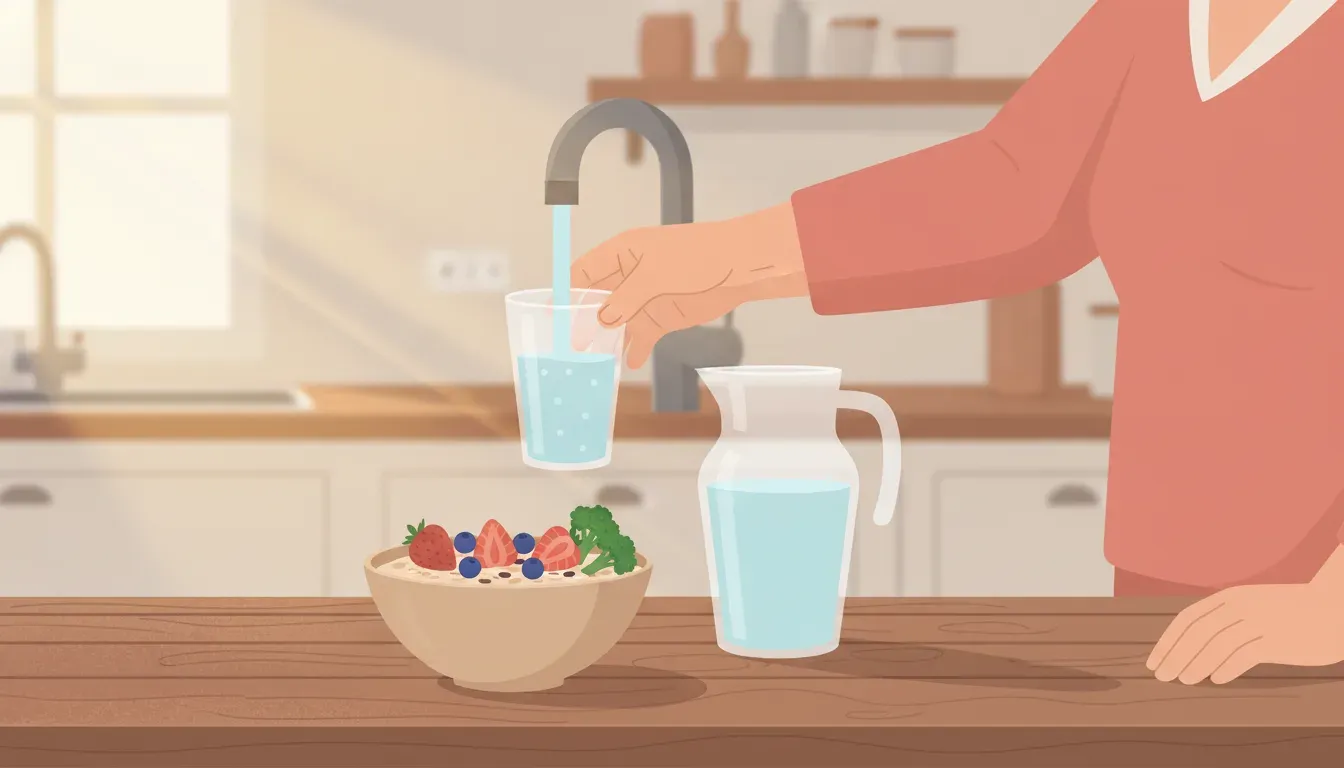
Fiber helps stool hold water and can make bowel movements easier to pass. Food sources include vegetables, fruit, beans, lentils, and whole grains. A fiber supplement such as psyllium or methylcellulose may be useful when food alone is not enough. Add fiber gradually. A sudden large increase can cause gas, bloating, or discomfort.
Fluids matter. Fiber needs enough liquid to work properly. If your doctor has limited your fluids because of heart, kidney, or another medical condition, ask how much is appropriate before increasing fiber. Do not use a fiber product to push through severe abdominal pain, vomiting, or suspected blockage.
For many people, fiber is a reasonable foundation because it can support regularity rather than simply forcing a bowel movement. It is not automatically the right first step for everyone.
2. Docusate, the traditional stool softener
Docusate is an emollient laxative. It helps water mix into stool so the stool can be easier to pass. It does not directly stimulate the bowel in the same way a stimulant laxative does. That makes it relevant when the goal is to avoid pushing, but it also means it is not an instant solution.
According to MedlinePlus, stool softeners commonly take one to three days to work. The same guidance says not to use them for more than one week unless a doctor directs you to do so. Follow the package label, take capsules or tablets with a full glass of water, and ask a pharmacist about interactions. Mineral oil is one medication that should be discussed before combining with a stool softener.
Docusate is not a universal winner. A clinical review from the American College of Gastroenterology notes that evidence for stool softeners is limited and that the guideline did not make a recommendation for them in chronic idiopathic constipation. That does not prove docusate is useless for every person. It does mean you should not assume the word gentle also means effective for long-term constipation. For a broader explanation of daily-use options, see Revival Point's guide to the best stool softener for daily use.
3. Osmotic options, such as polyethylene glycol
Osmotic laxatives pull water into the stool. Polyethylene glycol, often called PEG, is a common example. It is not technically the same as docusate, but people often compare the two when they are looking for relief without straining.
The AGA and ACG guideline gives PEG a strong recommendation for chronic idiopathic constipation, while noting that treatment choices still depend on the individual. That is useful evidence for constipation, but it is not proof that PEG is the best choice for hemorrhoids or for you personally. Ask a clinician or pharmacist about dosage, other medicines, kidney or heart conditions, and how long to use it.
4. Stimulant laxatives for short-term rescue
Stimulant laxatives, such as bisacodyl or senna, encourage the intestines to move. They may be used for short-term relief or as rescue therapy, but they can cause cramping or diarrhea. They are not the same as a stool softener, and a fast bowel movement is not always a better bowel movement when hemorrhoids are irritated.
Use only as directed on the label or by your clinician. Do not stack several laxatives because you are frustrated that the first one has not worked. If you keep needing rescue products, the problem needs a better plan rather than a stronger product.
Is MiraLAX or Colace Better for Hemorrhoids?
This common comparison is really a comparison between different mechanisms. Colace is a brand associated with docusate, a stool softener. MiraLAX is a brand associated with PEG, an osmotic laxative. Neither is automatically best for every person with hemorrhoids.
A clinician or pharmacist may consider how hard the stool is, how often you go, whether you are taking constipating medicines, your fluid restrictions, and whether you have kidney, heart, abdominal, or bowel conditions. They may also recommend fiber, a different option, or an evaluation instead of either product.
The practical goal is not to win a brand comparison. It is to produce a comfortably soft stool without severe urgency, watery diarrhea, or repeated straining. Keep a short record of what you tried, the dose on the label, when you took it, the result, and any side effects. That gives your pharmacist or doctor something useful to review. If you are comparing medicine with non-drug approaches, Revival Point also explains constipation medicine versus natural laxatives.
What Can You Do Besides Taking a Stool Softener?
Medication works better when the daily basics are not working against it. Try these steps unless your healthcare professional has told you otherwise:
- Drink fluids that fit your medical plan. Ask your clinician about the right amount if you have a fluid restriction.
- Increase fiber slowly. Add one change at a time so you can tell what helps and avoid unnecessary bloating.
- Answer the urge to go. Repeatedly holding stool can make it drier and harder to pass.
- Do not sit and push for long periods. If nothing happens, get up and try again later.
- Move regularly. A walk or other safe activity can support bowel regularity.
- Use comfort measures. A warm sitz bath may ease mild hemorrhoid discomfort. Follow medical advice for creams or suppositories.
Review medicines that may contribute to constipation with a clinician or pharmacist. Opioid pain medicines, iron, some antacids, and some medicines for blood pressure or allergies can affect bowel habits. Do not stop a prescribed medicine on your own.
Can a Digestive Supplement Replace a Stool Softener?
No. A dietary supplement is not interchangeable with an over-the-counter stool softener, and it should not be presented as a treatment for hemorrhoids. Revival Point's Total Bowel Release is a digestive health supplement. Anyone considering it should review the ingredients, current medicines, health conditions, and goals with a healthcare professional. It is not a promise of immediate relief, and it does not replace evaluation for rectal bleeding or persistent constipation.
If you are comparing products, look for a complete ingredient label and clear directions. Be cautious with any product that promises to cure hemorrhoids, works instantly for everyone, or eliminates the need to speak with a clinician.
When Should You Stop Self-Treating?
Constipation and hemorrhoids are common, but rectal bleeding should not automatically be blamed on hemorrhoids. Contact a healthcare professional if bleeding continues, symptoms do not improve after about a week of home care, or your bowel habits change and stay changed. The Mayo Clinic advises medical attention for bleeding or hemorrhoids that do not improve after a week.
Seek urgent care for a large amount of bleeding, dizziness, faintness, severe or rapidly worsening pain, black or tarry stool, repeated vomiting, fever, a swollen painful abdomen, or an inability to pass stool or gas. Also call promptly if constipation is new and persistent, you have unexplained weight loss, or you have a personal or family history that raises concern for bowel disease.
Frequently Asked Questions
What is the best stool softener for hemorrhoids?
There is no universal best choice. Fiber, docusate, PEG, or another option may fit different situations. The right choice depends on stool consistency, timing, medical conditions, medicines, and whether red-flag symptoms are present.
Should I take a stool softener if I have a hemorrhoid?
A stool softener may be used to make bowel movements easier when straining is a problem, but follow the label and ask a pharmacist or clinician if you take other medicines or have medical conditions. Do not use it to ignore ongoing bleeding or severe pain.
How long does docusate take to work?
MedlinePlus says stool softeners usually take one to three days to work. Do not take them longer than one week unless your doctor tells you to. Contact a clinician if stools remain hard or your bowel habits change.
Can fiber make hemorrhoids worse?
Too much fiber too quickly, or not enough fluid for the fiber you take, can cause bloating or worsen constipation. Increase it gradually and ask your healthcare professional how much fluid is safe for you.
Does rectal bleeding always mean hemorrhoids?
No. Hemorrhoids can bleed, but other conditions can also cause rectal bleeding. Large amounts of blood, dizziness, faintness, black stool, persistent bleeding, or a change in bowel habits needs medical attention.
